
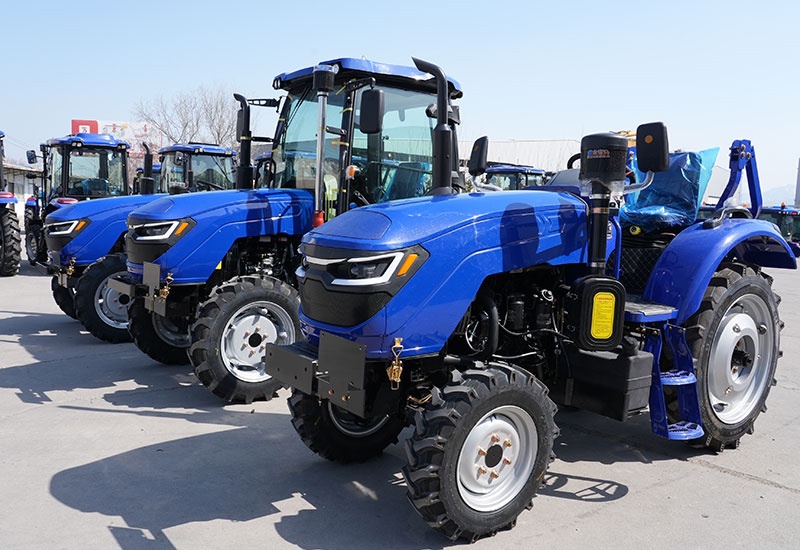
A deep look at how modern tractors are reshaping productivity worldwide
Agricultural mechanization has become one of the most important drivers of productivity growth in global farming. As populations continue to rise and food demand increases, farmers across the world are under growing pressure to produce more with fewer resources. In this context, tractors and modern agricultural machinery are no longer optional tools—they are essential assets.
Over the past decade, the adoption of mechanized farming solutions has expanded rapidly across both developed and developing markets. In regions such as Europe and North America, large-scale farms rely heavily on high-horsepower tractors equipped with advanced technologies to maximize efficiency. Meanwhile, in emerging markets across Asia, Africa, and South America, smaller farms are increasingly transitioning from manual labor to mechanized operations.
One of the key advantages of modern tractors is their versatility. A single tractor can perform multiple functions, including plowing, sowing, harvesting, transportation, and land preparation. This multifunctionality significantly reduces labor costs while improving operational efficiency. For farmers working in challenging environments—such as hilly terrains or areas with limited infrastructure—compact and adaptable tractors play an especially critical role.
Another major factor driving mechanization is technological innovation. Today’s tractors are equipped with features such as four-wheel drive systems, hydraulic lifting mechanisms, and intelligent control systems. These technologies not only enhance performance but also improve fuel efficiency and reduce environmental impact. In regions where fuel costs are a major concern, energy-efficient machinery can make a significant difference in overall profitability.
Customization has also become increasingly important in the global agricultural machinery market. Different regions have unique farming conditions, including soil types, climate, crop varieties, and operational scales. As a result, farmers and distributors are seeking equipment that can be tailored to their specific needs. Adjustable wheel spacing, optimized engine configurations, and specialized attachments are just a few examples of how tractors can be customized to improve performance in different environments.
In addition, the role of reliable suppliers has become more critical than ever. Buyers are not only looking for high-quality products but also for partners who can provide consistent supply, technical support, and after-sales service. A strong supply chain, strict quality control, and global service networks are key factors that influence purchasing decisions.
Looking ahead, agricultural mechanization will continue to evolve. Trends such as smart farming, automation, and sustainable agriculture are expected to shape the future of the industry. Tractors will become more intelligent, more efficient, and more environmentally friendly, helping farmers meet the challenges of modern agriculture.
For global buyers, investing in the right tractor solutions is not just about equipment—it is about building a more productive and sustainable farming future.
Send Us A Message